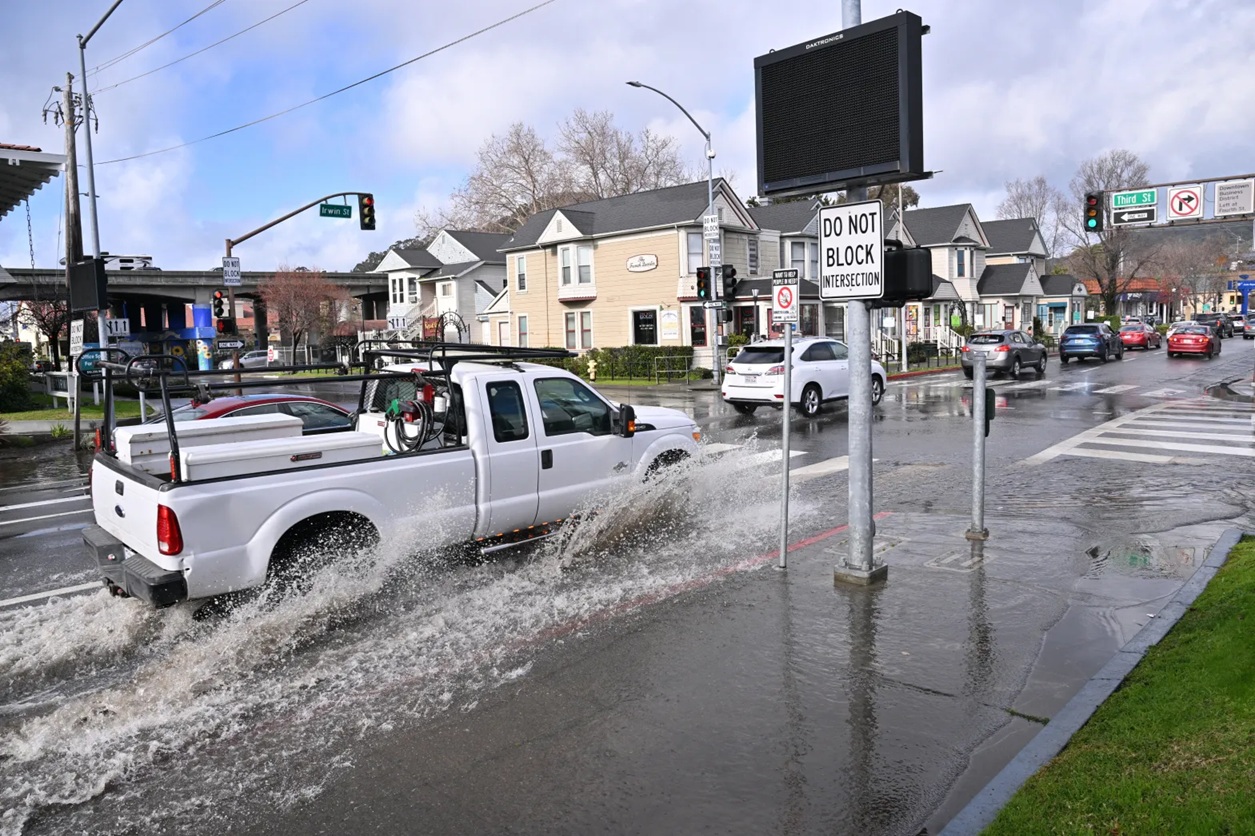
A recent report that says defending San Rafael against rising seas would cost $720 million to nearly $2 billion has sent shockwaves through the community and spurred officials to come up with solutions quickly.
The feasibility study outlines three adaptation strategies — seawalls, flood gates or raising the land — and envisions a 25-year timeline to get a project done. It also presents several hurdles that stand in the way.
After a presentation on June 1, members of the City Council said developing the right response is a daunting task that is beyond the responsibility of the city alone.
“San Rafael absolutely needs to be a strong advocate, but I’d say right now we also need to be a strong advocate for a lead agency, and for regional coordination,” Vice Mayor Rachel Kertz said. “If we even tripled our budget, it would not be enough — and that means not doing anything else in the city to just address sea-level rise.”
In addition to the big-picture projects, the study offered a variety of near-term solutions that the city could initiate, perhaps buying some time, Hagemann said.
One of the near-term options is to seek funding sources to help move some of the efforts along, Hagemann said.
Paul Navazio, the interim city manager, said the funding challenge concerns him.
“When you’re looking at sort of the sobering outlook, oftentimes the communities that have eventually received significant — particularly federal funding — support, it’s been after the disaster, and it’s part of building back,” he said.
It’s difficult to get the funding support these types of issues deserve ahead of a disaster, he said.
Councilmember Eli Hill called the January storm and flooding a “wakeup call.”
“I obviously want to make certain we’re in position to make those requests for money, get to the front of the line if we can,” Hill said.
Through public outreach, residents said they want to prioritize near-term focus on emergency preparedness, environmental justice, protecting residents and businesses and building and rebuilding in safer ways.
To read more or listen online, visit the Marin IJ.